ionCube Loader on Ubuntu 24.04 – Runtime Support for Encrypted PHP Applications
ionCube Loader is a widely used PHP extension that allows the execution of encrypted or obfuscated PHP code. It is essential for running commercial PHP applications distributed in compiled form using ionCube Encoder. On Ubuntu 24.04 (Noble Numbat), it integrates seamlessly with supported PHP versions and modern web server configurations.
What is ionCube Loader?
ionCube Loader is a runtime decoder that interprets pre-compiled PHP files created with ionCube Encoder. It’s most commonly used by:
- Commercial software vendors protecting source code from reverse engineering
- License-restricted applications (e.g., CRMs, billing systems, CMS modules)
- Hosts and end-users running proprietary software on Linux servers
The loader acts as a dynamic extension loaded into PHP, enabling the interpretation of .php or .inc files encoded in ionCube format.
Key Use Cases
- Running commercial or licensed PHP apps (e.g., WHMCS, Blesta, BoxBilling)
- Hosting environments offering support for third-party modules requiring encryption
- Protecting proprietary codebases during deployment without exposing raw PHP
- Ensuring software license enforcement with minimal performance overhead
Compatibility with Ubuntu 24.04
Ubuntu 24.04 includes PHP 8.3 as its default version, with optional packages for PHP 8.2 and PHP 8.1 via third-party repositories (e.g., ondrej/php). ionCube Loader currently supports PHP up to version 8.2 as of mid-2025, with limited or no support for PHP 8.3 unless updated by ionCube.
| Component | Status with Ubuntu 24.04 |
|---|---|
| PHP 8.2 | Fully supported by ionCube Loader (v13.0+) |
| PHP 8.3 | Not yet supported by ionCube Loader (as of July 2025) |
| Web Servers | Compatible with Apache2 and Nginx (via PHP-FPM or mod_php) |
| OS Architecture | Loader binaries available for 64-bit systems (x86_64) |
| Thread Safety | Separate builds for ZTS and non-ZTS PHP |
Ubuntu’s modular packaging of PHP (via mods-available, conf.d, and php.ini) simplifies the configuration of ionCube Loader per PHP version or per pool (in PHP-FPM).
Technical Characteristics
- No source code changes required to use encoded files
- Minimal performance overhead, typically <5% under real-world workloads
- Supports dynamic and preloading of encoded files
- Integrates with CLI, Apache2, PHP-FPM, and Docker-based deployments
- Capable of working alongside OPcache, although encoded files are not optimized by it
Licensing & Deployment
- ionCube Loader itself is free to use
- Requires matching loader version to encoded files (e.g., files encoded with ionCube Encoder 12 require Loader 12+)
- Ideal for production environments hosting licensed third-party apps
- Suitable for shared, VPS, and dedicated hosting platforms
For secure and scalable deployments, it can be used in tandem with Docker containers, SELinux/AppArmor profiles, and reverse proxies.
Security Considerations
- ionCube does not decrypt files to disk—code is decrypted in memory
- Helps reduce the risk of intellectual property theft
- Does not replace PHP-level security best practices
- Files encoded with license restrictions can be bound to domains, IPs, or expiration dates
Alternatives
| Feature | ionCube Loader | SourceGuardian | Zend Guard (discontinued) |
|---|---|---|---|
| Current PHP Support | PHP 5.6–8.2 | PHP 5.6–8.2 | PHP 5.6 only |
| License Binding | Yes (Encoder option) | Yes | Yes |
| Encryption Strength | High | High | Medium |
| Free Loader | Yes | Yes | Yes (discontinued) |
While ionCube and SourceGuardian remain the top options in 2025, ionCube is often more widely supported by third-party commercial software.
Running ionCube Loader on Ubuntu 24.04 provides a dependable environment for hosting encrypted PHP applications. It is ideal for:
- Production systems running licensed commercial apps
- Hosts offering secure runtime environments
- Developers protecting intellectual property in PHP
- Businesses that need predictable, long-term PHP compatibility on a modern OS
Ubuntu 24.04’s flexibility, combined with ionCube’s encryption engine, offers a solid foundation for commercial PHP software delivery.
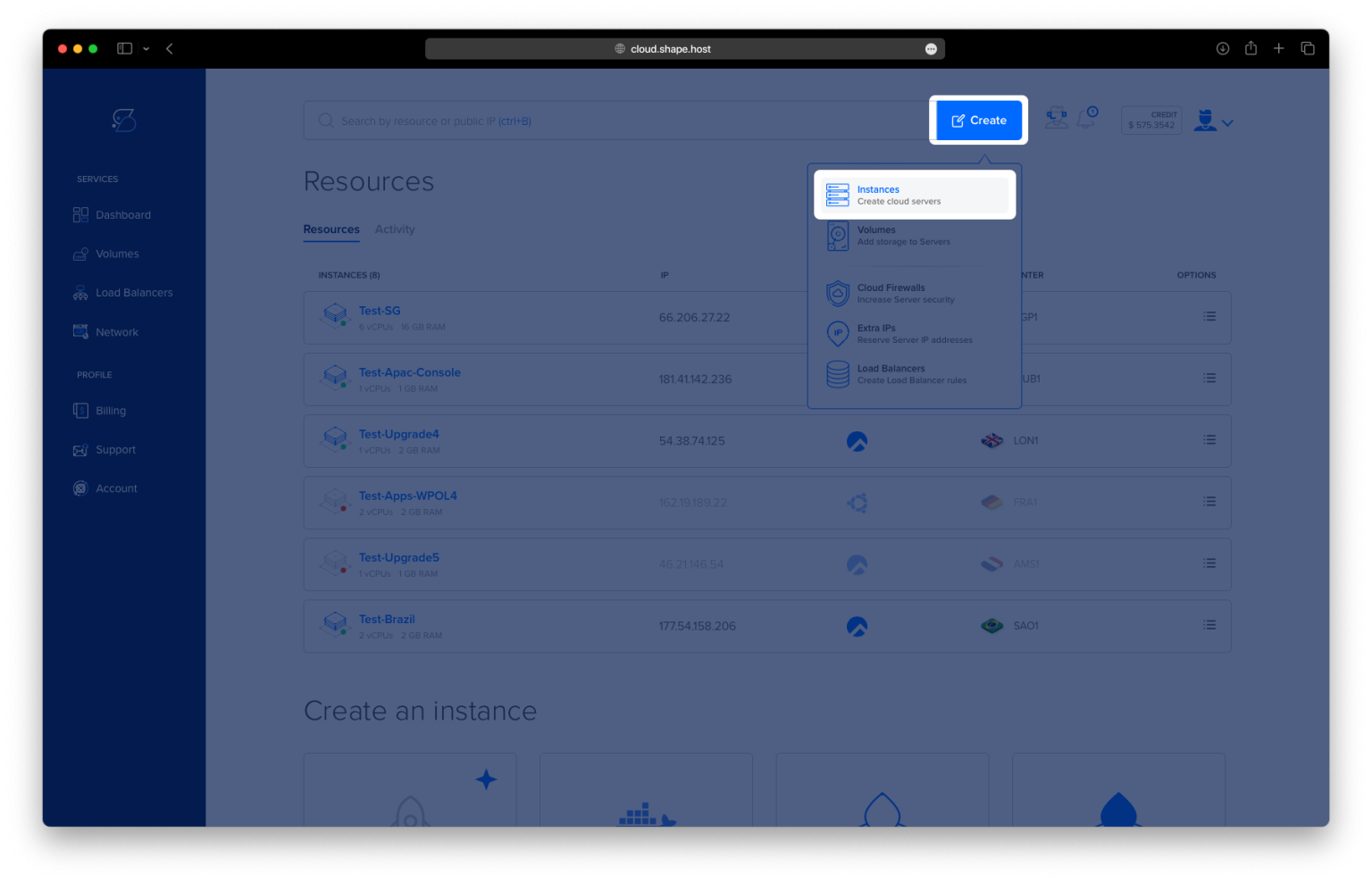
Step 1: Create a VPS Instance on Shape.Host
Before beginning, you’ll need a server running Ubuntu 24.04. Here’s how to get started with a VPS on Shape.Host:
Go to https://shape.host and log in to your account.
Click “Create”, then choose “Instance”.

Choose your server location closest to your target users.

Select Ubuntu 24.04 (64-bit) as your operating system.
Pick a plan with at least 2 CPUs, 2 GB RAM, and 20 GB SSD.

Click “Create Instance”.

Note the IP address and login credentials once the instance is created.

Step 2: Connect to Your Instance via SSH
From Linux/macOS:
ssh root@your-server-ip
From Windows (via PuTTY):
- Open PuTTY and enter
root@your-server-ipas the host. - Click Open and accept the prompt.
Replace your-server-ip with the actual IP address of your Shape.Host server.
Step 3: Install Apache and PHP 8.3
3.1 Update Package Lists
apt update
This command updates the list of available packages.

3.2 Install Apache Web Server
apt install apache2

Installs Apache.
systemctl enable apache2
Enables Apache to start at boot.
systemctl start apache2
Starts the Apache service.

3.3 Install PHP 8.3 and Extensions
apt install php8.3 php8.3-cli php8.3-common php8.3-mysql php8.3-xml php8.3-mbstring php8.3-curl php8.3-zip php8.3-gd libapache2-mod-php8.3 unzip wget nano
Installs PHP 8.3 with essential extensions and tools like wget, unzip, and nano.

3.4 Enable PHP 8.3 Module in Apache
a2enmod php8.3
Activates PHP 8.3 integration with Apache.
systemctl restart apache2
Restarts Apache to apply changes.

3.5 Confirm PHP Installation
php -v
Displays the installed PHP version.

php -i | grep extension_dir
Shows the extension directory where ionCube will be placed.

Step 4: Install ionCube Loader
4.1 Download and Extract ionCube
cd /opt
wget https://downloads.ioncube.com/loader_downloads/ioncube_loaders_lin_x86-64.tar.gz
tar -xzf ioncube_loaders_lin_x86-64.tar.gz
Downloads and extracts the ionCube Loader package.

4.2 Copy ionCube Loader for PHP 8.3
cd ioncube
cp ioncube_loader_lin_8.3.so /usr/lib/php/20230831/
Places the loader file in the PHP extensions directory.
⚠️ 20230831 is the directory used by PHP 8.3 on Ubuntu 24.04 — confirm it matches yours if needed.

4.3 Create ionCube Configuration File
nano /etc/php/8.3/apache2/conf.d/00-ioncube.ini
Add the following line:
zend_extension=/usr/lib/php/20230831/ioncube_loader_lin_8.3.so
Save and exit (Ctrl + O, Enter, then Ctrl + X).

4.4 Restart Apache
systemctl restart apache2
Applies the ionCube loader.

Step 5: Verify ionCube Installation
5.1 Create a PHP Info Page
echo "<?php phpinfo(); ?>" > /var/www/html/info.php
Open in your browser:
http://your-server-ip/info.php
Look for the ionCube Loader section to confirm successful installation.

5.2 Clean Up
rm /var/www/html/info.php
rm -rf /opt/ioncube*
Removes test files and the downloaded installer.

You’ve now installed Apache, PHP 8.3, and the ionCube Loader on Ubuntu 24.04. Your server is now ready to host commercial or encoded PHP applications securely and efficiently.
If you’re looking for scalable and affordable Linux SSD VPS solutions, Shape.Host provides lightning-fast servers and easy deployment for all your web application needs.
Deploy your next project with Shape.Host today and experience reliable cloud performance.