What is Apache Tomcat 11?
Apache Tomcat 11 is the latest version of the widely used open-source Java servlet container and web server developed by the Apache Software Foundation. It is designed to run Java-based web applications and provides an implementation of the Jakarta Servlet, Jakarta Server Pages (JSP), and related technologies.
Tomcat 11 introduces full support for the Jakarta EE 11 specification, marking a shift from the legacy Java EE namespace (javax.*) to the newer jakarta.* package namespace. It is ideal for deploying lightweight, scalable, and secure Java web applications.
Key Features of Tomcat 11
Jakarta EE 11 Compatibility
- Full support for the jakarta. namespace*, aligning with the latest Jakarta EE specifications
- Legacy applications using
javax.*must be migrated to remain compatible
Improved Architecture
- Modular, flexible codebase with enhancements to performance, error handling, and resource management
- Reduced startup time and memory footprint compared to older versions
Security Enhancements
- Improved HTTPS and TLS support
- Hardened default configurations to reduce attack surface
- Enhanced session management and authentication support
WebSocket and Servlet Enhancements
- Upgraded WebSocket 2.1 support
- Servlet 6.1 and JSP 3.1 compatibility for building dynamic web content
Management and Configuration Tools
- Built-in web management interface for monitoring, deployment, and configuration
- Extensive support for JMX (Java Management Extensions) and logging
Why Use Tomcat 11 on Ubuntu 24.04?
Ubuntu 24.04 is a long-term support (LTS) release that provides a modern and secure environment for deploying Java web servers:
- Updated system libraries and kernel for performance and security
- Support for OpenJDK 21, compatible with Tomcat 11
- Easy service management with systemd
- Ideal for both development and production environments
- Compatible with cloud platforms, Docker, and container orchestration tools like Kubernetes
System Requirements
| Component | Recommended Minimum |
|---|---|
| OS | Ubuntu 24.04 LTS (64-bit) |
| Java Version | OpenJDK 17 or higher (21 recommended) |
| Memory | 512 MB (1 GB or more for production) |
| Disk Space | 250 MB+ for base installation |
| Network | Uses port 8080 (HTTP), 8443 (HTTPS) |
Typical Use Cases
- Hosting Java-based web applications and APIs
- Running enterprise intranet portals or content management systems
- Supporting RESTful and SOAP-based web services
- Integrating Jakarta EE 11 microservices into larger systems
- Educational and research platforms based on Java servlets or JSP
Tomcat vs Other Java Application Servers
| Feature | Tomcat 11 | WildFly | Payara Server | Jetty |
|---|---|---|---|---|
| Jakarta EE Support | Partial (Servlet/JSP) | Full | Full | Partial (like Tomcat) |
| Lightweight | Yes | No | No | Yes |
| Ideal for | Web apps and REST APIs | Full Jakarta EE apps | Enterprise Jakarta EE | Embedded Java apps |
| Resource Usage | Low | Moderate to high | Moderate | Very low |
| Configuration | Simple (XML-based) | Complex (management UI) | Moderate | Simple (Java-based) |
Security Recommendations
- Always deploy behind HTTPS, using Let’s Encrypt or commercial SSL certificates
- Remove default example apps and manager interfaces in production
- Configure firewall rules to restrict port access (e.g., allow port 8080 only internally)
- Keep Tomcat and Java regularly updated
- Use reverse proxy (e.g., Nginx or Apache HTTP Server) for SSL termination and header control
- Apply security headers and CORS settings as needed for frontend integration
Tomcat 11 on Ubuntu 24.04 offers a modern and reliable environment for deploying lightweight Java web applications. With its full support for Jakarta EE 11 and improvements in performance and security, Tomcat 11 is well-suited for both new projects and organizations updating from older servlet containers.
Ubuntu 24.04’s long-term support and updated software stack make it an excellent choice for both development and production environments. Whether you’re deploying microservices, legacy apps, or enterprise tools, the Tomcat 11 and Ubuntu 24.04 combination delivers performance, security, and ease of use.
Step 1: Deploy a Clean Server on Shape.Host
To get started, you’ll need a fresh VPS running Ubuntu 24.04. Here’s how to set that up on Shape.Host:
Go to https://shape.host and sign in.
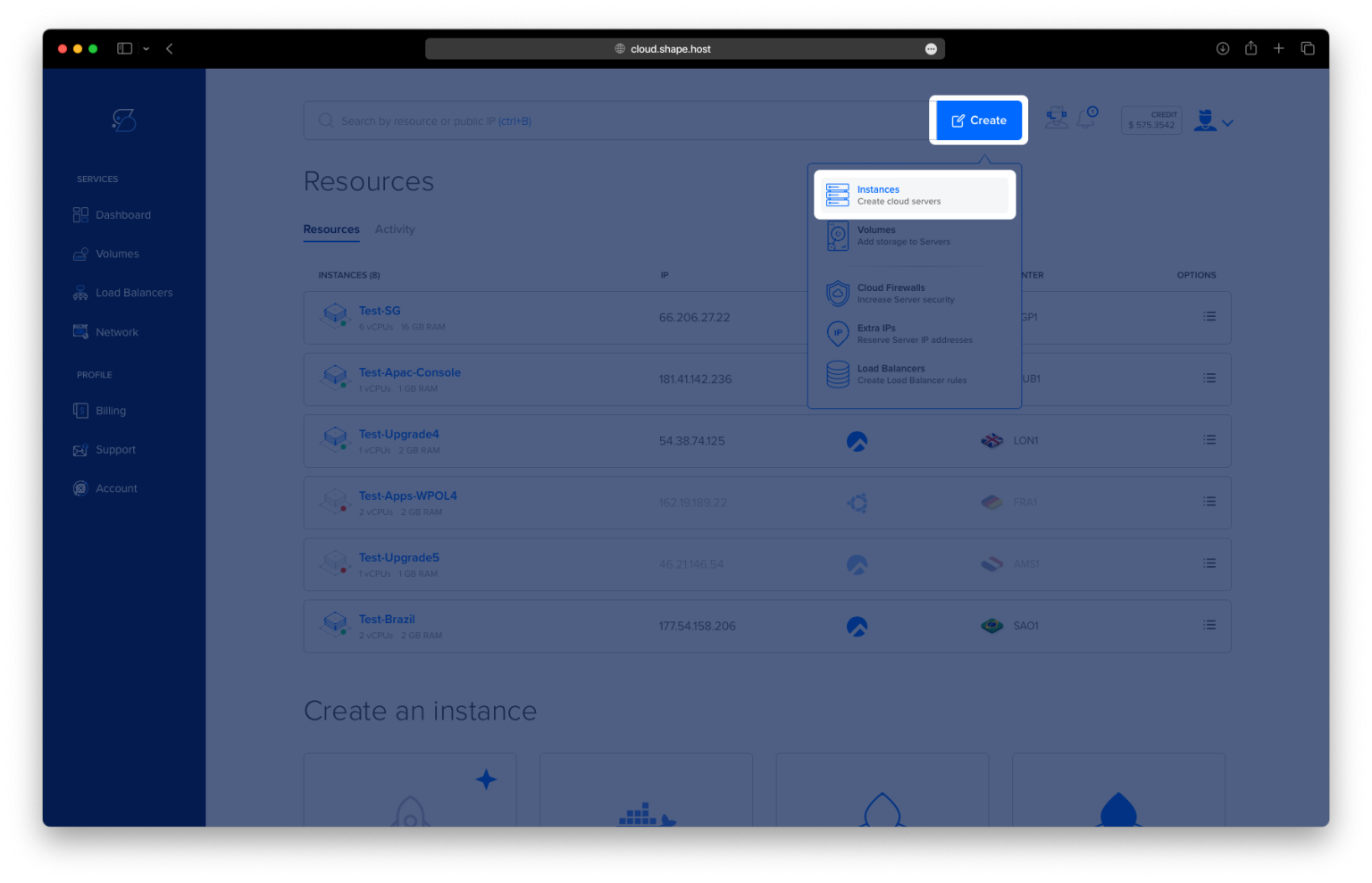
Click on “Create” and choose “Instance”.

Select your preferred server location.

Choose Ubuntu 24.04 (64-bit) as your operating system.
Pick a plan with at least 2 CPUs, 4 GB RAM, and 20 GB SSD.

Click “Create Instance”.

After setup, copy the server’s IP address from the Resources tab.

Step 2: Connect to Your Server
If you’re on Linux/macOS:
ssh root@your_server_ip
On Windows, use PuTTY to connect via SSH.
Step 3: Update System Packages
apt update
This ensures your system is running the latest package versions.

Step 4: Install Java
Tomcat requires Java. Let’s install OpenJDK 17:
apt install openjdk-17-jdk

Step 5: Create a Dedicated Tomcat User
We’ll create a system user for running Tomcat (no login shell, non-root):
useradd -m -U -d /opt/tomcat -s /bin/false tomcat
-mcreates a home directory-Ucreates a user group-d /opt/tomcatsets the home directory-s /bin/falsedisables shell login
Step 6: Download Tomcat 11
Download the latest version of Tomcat 11 to /tmp:
wget https://downloads.apache.org/tomcat/tomcat-11/v11.0.6/bin/apache-tomcat-11.0.6.tar.gz -P /tmp

Step 7: Create Tomcat Directory
Create the Tomcat installation directory:
mkdir -p /opt/tomcat
Step 8: Extract and Organize Files
Unpack the archive into /opt/tomcat:
tar -xvzf /tmp/apache-tomcat-11.0.6.tar.gz -C /opt/tomcat
Move it to a simpler path:
mv /opt/tomcat/apache-tomcat-11.0.6 /opt/tomcat/tomcat11
Step 9: Start Tomcat
Run Tomcat using the built-in startup script:
/opt/tomcat/tomcat11/bin/startup.sh
You should see output confirming that Tomcat has started.

Step 10: Access Tomcat in Your Browser
Open your browser and go to:
http://your-server-ip:8080
If everything was set up correctly, you’ll see the Tomcat 11 welcome page.

With Shape.Host, you get:
- Lightning-fast Cloud VPS with full root access
- Clean Ubuntu 24.04 environments
- Instant scaling to handle production workloads
- Global locations for low latency access
Launch your next Java project with Shape.Host — your perfect cloud partner for Tomcat deployments!